 OK
OKDate, batch and time
Reading (OCR) and verification (OCV) of best-before date, batch and time against the production order. Alert when the print head starts to degrade.
Home / Machine vision
100% in-line inspection
A cold seal, an illegible date or a case with eleven bottles won't show up in the hourly sample. They show up if you look at every unit. That is what machine vision does: look, measure and decide in milliseconds, and keep the proof. Millions of packs have already passed through our cameras.
What we inspect
Most of a packer's complaints don't come from the product; they come from the pack. These are the inspections we install most often. If your defect isn't on the list, we'll run a feasibility test free of charge.
Reading (OCR) and verification (OCV) of best-before date, batch and time against the production order. Alert when the print head starts to degrade.
Cap presence, height, centring and skew; opening tab and tamper seal.
Seal width and continuity, product trapped in the seal, creases and folds.
Correct label for the running format, presence, position and skew. Essential for private label and format changeovers.
Reading and quality grading of GS1-128 and GS1 DataMatrix, and matching against the product.
Underfill, overfill and empty or misfed packs.
Units per tray, case or shrink-wrapped pack before wrapping: not a single pack missing.
SSCC reading, matching against the plant system and blocking dispatch if it doesn't tally.

How it decides
Each format has its own recipe: which zones to look at, with which tool and at what threshold. The camera scores each tool; if any falls out of range, the pack is rejected and its image is stored with the exact reason.
How it's built
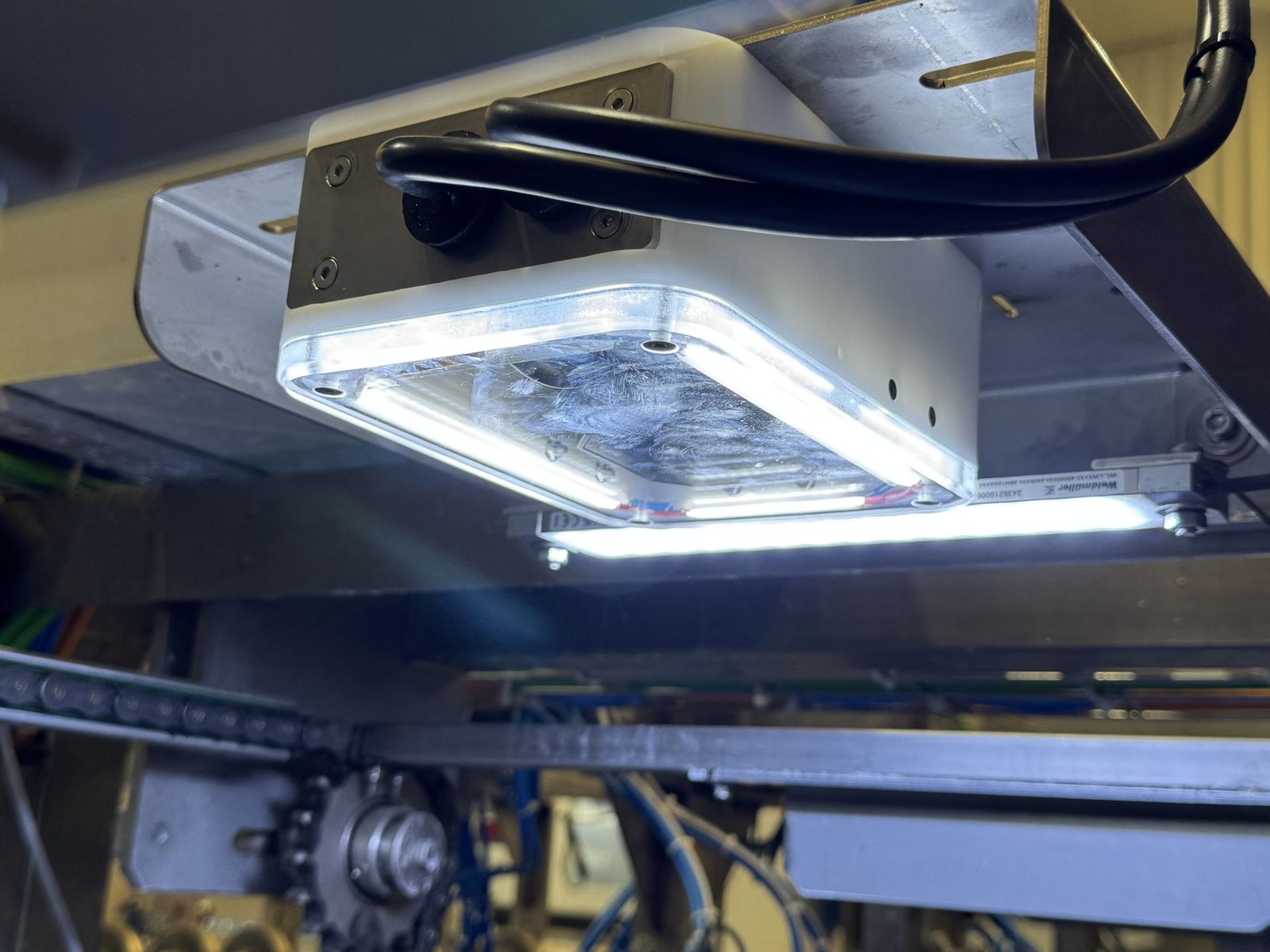
The camera sees, the trigger decides when, the recipe sets the verdict, the rejector acts and the log keeps the record. If the timing between trigger and rejector is off, the wrong pack gets rejected. That's why we tune it on site, with real product.
Hardware
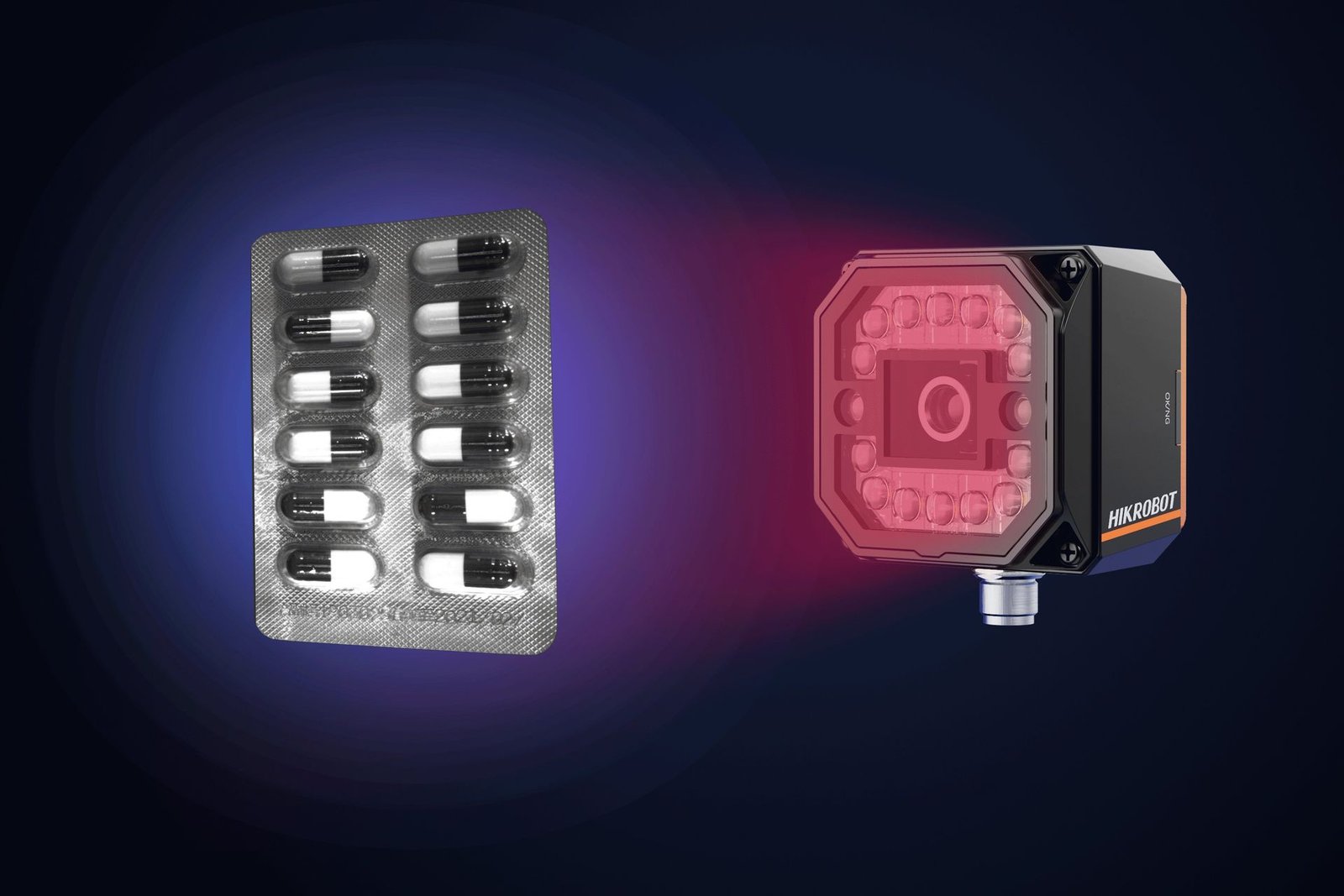
Compact smart cameras with on-camera processing and integrated lighting, designed for presence detection, measurement, counting and reading of characters and codes. We choose the optics and lighting for each inspection point.
Standards
We trace everything that passes our cameras. Every reject is stored with its image, time, recipe and reason, and NOK images are kept for the product's entire shelf life: the evidence audits ask for, and the evidence that settles a complaint months later.
FAQ
Date, batch and time (OCR reading and OCV verification), caps and closures, seals, labels, barcodes and DataMatrix, fill level, counting in cases and multipacks, and the pallet SSCC. On 100% of packs, in line, with a photo of every reject.
Classic vision when the defect can be described with rules: measurements, presence, character reading. Deep learning when it cannot: seals, surfaces or natural and highly variable products, with neural networks trained on your own products.
We run a feasibility test at no cost with your packs. We tell you whether it can be detected in line, with which technique and with what reliability to expect; what cannot be guaranteed, we tell you up front.
Free feasibility test
Send us photos of a good pack and a bad one, or real samples. We'll tell you whether it can be detected in-line, with which technique and with what expected reliability. Anything that can't be guaranteed, we'll tell you up front; whatever we install, we guarantee.