OK
Mak Food, a manufacturer based in Molina de Segura (Murcia, Spain) that produces fruit and vegetable blends and plant-based drinks for the food industry, has started building a new factory on the Hercas industrial estate in the same town. According to El Confidencial Digital, citing Murcia Plaza, the plant will cover 14,800 m² on a 30,000 m² site and the company aims to finish it before May 2027. With it, blend capacity could rise from 30,000 to a maximum of 80,000 tonnes, and plant-based drink capacity (rice, oat, malt and hemp) from 6,000 to 18,000 tonnes.
The most striking figure is the workforce. Today there are 42 people, and the company expects to hire between 45 and 60 once the factory is running: more than doubling the team. The company has a turnover of 50 million euros, has grown by more than 40 % over the last year, sells a large share of its output in the Middle East, Asia, Central America and Africa, and has set itself a target of 180 million in revenue by 2030.
What it means for a packaging plant
Tripling drink output with twice the people is a good problem to have, but there is a catch: if every new job is designed like the current ones, the plant grows in volume and in manual tasks too. And finding, hiring and training 50 people does not happen in a month.
Before finalising the headcount of a new factory, a simple exercise pays off: list every planned job and separate judgement from repetition. Palletising cases at the end of the line, case packing, feeding a machine with cartons or film, or checking every pack by eye for eight hours are tasks that can be automated, and they are also the hardest to fill and the ones that cause the most sick leave. Preparing recipes, adjusting the line during a format changeover, dealing with a reject or watching product quality are work for people, and that is where new staff add the most.
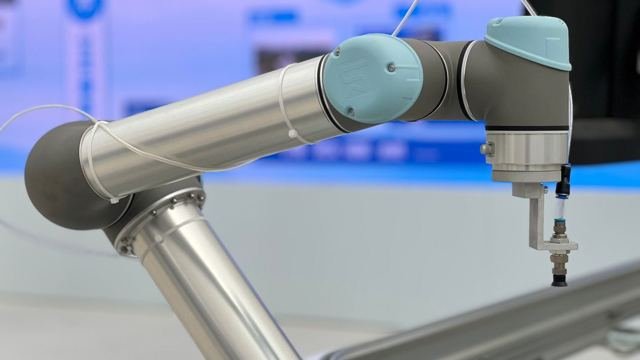
A palletising or case-packing cobot takes up little space, works alongside people with the guarding set by the risk assessment and can be reprogrammed when the pallet pattern changes. In a factory still under construction, the cheap option is to reserve the space, the compressed air supply and the PLC signals now; adding it once the line is installed costs more.
The second front is inspection. Selling into such different markets usually means labels in several languages, more SKUs and more changeovers. With more volume and new staff, sampling falls short: a camera that reads the date and batch code and checks the label on every pack stops one shift's mistake from ending up in a container bound for another continent.
And the third is data. If stops and waste are recorded from the very first shift, the plant soon knows which jobs slow the line down and where automation pays off later. We go into more detail on our automation and cobots page.
Key points before hiring
- Job by job: separate repetitive tasks (palletising, case packing, feeding, visual checks) from those that need judgement.
- Reserved space: leave room, air and signals for a cobot even if it is not bought on day one.
- 100 % inspection: date, batch code and label on every pack, especially with SKUs for several markets.
- Training: prepare new staff to supervise the line and deal with rejects, not just to move cases.
- Data from start-up: stops and waste per station, so the next automation step is decided with numbers.
A new factory is the best moment to decide what machines do and what people do. If you are planning something similar, let's talk.