OK
The Packaging Innovation Cluster of the Valencia region has published a report on applying artificial intelligence in the sector, produced in collaboration with Nunsys. To prepare it, the cluster interviewed member companies of different sizes, from packaging manufacturers and converters to material distributors, technical advisers and design firms, and assessed their technological and organisational capabilities. The result is seven areas where AI can add value: administration and order management, production planning, quality control, sales, knowledge management, application development and maintenance, and energy efficiency.
The most useful part is not the list but the conclusion. So far, companies have mainly used AI to prepare documents, analyse information, look up regulations or build internal tools; on the factory floor they are starting to explore planning, image-based defect detection and analysis of operating parameters. The cluster proposes moving from one-off trials to concrete, measurable projects: choose the priority applications, prepare processes and teams, and run pilots before rolling them out. Its director sums it up in one sentence: adoption must respond to specific needs. The report adds that technology alone guarantees nothing: practical training, reliable data, defined procedures and resources are all needed.
It is not an isolated case. At the end of October, the technology institute ITENE presented FLEXIA, a project running from July 2026 to December 2027 with support from IVACE+i and ERDF funds. It aims to use machine learning to predict the properties of flexible food packaging before it is made, and to monitor critical process variables with sensors in order to detect deviations and reduce defects and material losses.
What it means for a packaging plant
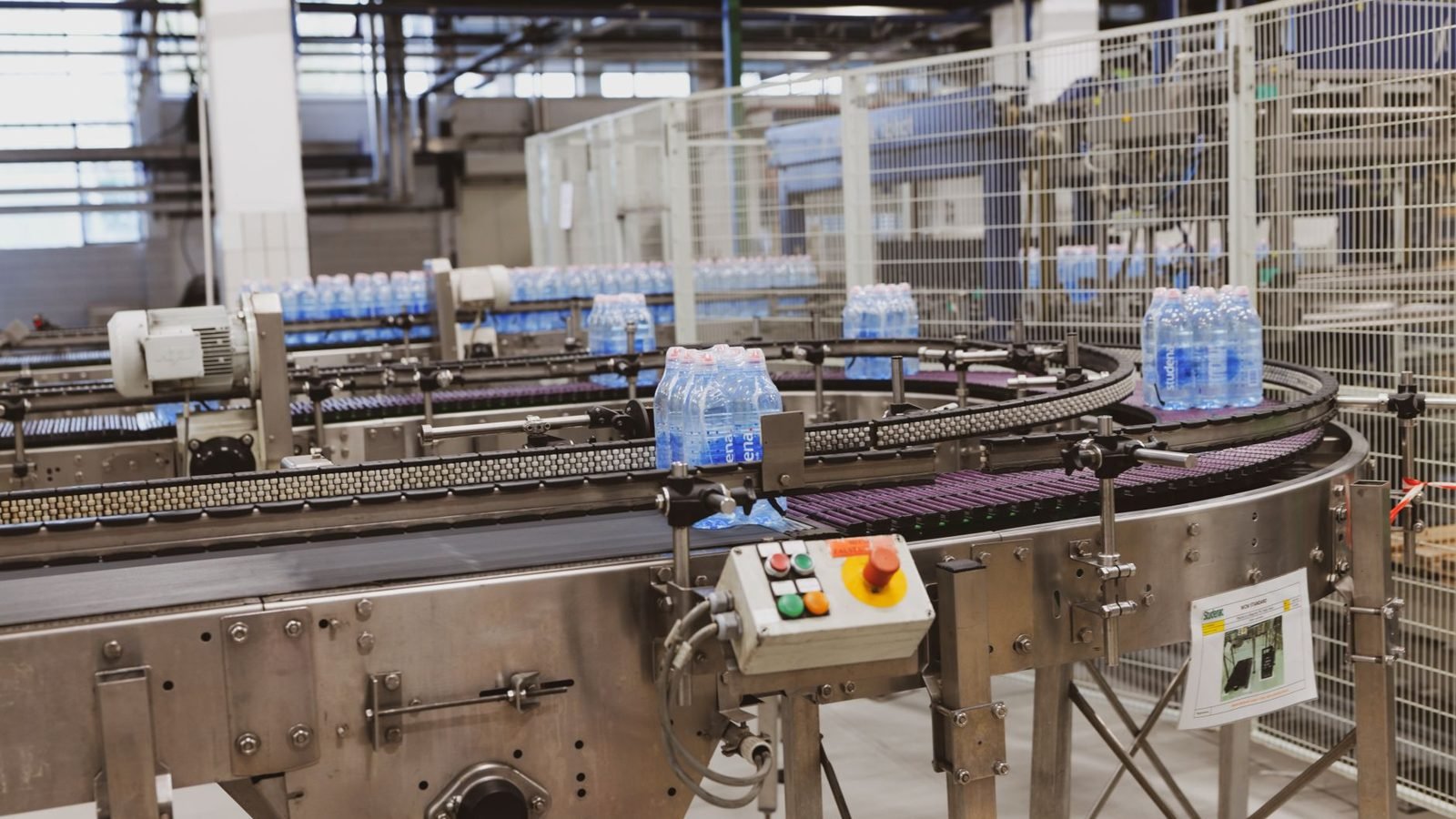
The report is about those who make packaging, but the lesson applies just as well on the other side, in the plant that fills, closes and labels. Of the seven areas, three are felt directly on the line: quality control, production planning and energy efficiency. And in all three the starting point is the same: a problem whose cost is already known.
In quality, the clearest example is image-based inspection. Some defects are handled well by conventional vision with fixed rules, such as a missing date or a high cap. Others change shape and appearance from one pack to the next, such as a wrinkle in a seal or a poorly applied label on a flexible pack; that is where a deep learning model trained on images from the line itself adds value. But before talking about AI, it is worth knowing how many packs are rejected today, how many of those rejects are false and how many complaints come in.
Process data works the way ITENE describes for packaging manufacture: a jaw temperature, a reel tension or a pressure that drifts gives warning before the defect appears. To make use of it, those variables need to be recorded with their batch, format and shift, and you need to know how the line behaves when it runs well. That is what we explain on our applied artificial intelligence page: connect the data that already exists and ask it specific questions. It is also the idea we put forward in connection with Alimentaria FoodTech 2026: AI should be judged like any other machine, by what it measures and what it solves.
Practical points
- Start with a problem whose cost is known: rejects, false rejects, waste or stoppages, not "applying AI" in general.
- Measure before changing: the baseline is what will tell you whether the pilot has worked.
- Data with context: every image or reading tagged with its batch, format and shift.
- A pilot on a single line: the one that causes most trouble, with the success criterion written down before starting.
- Train the people who will use it: operators and maintenance need to understand what the system does and what to do when it raises an alert.
AI does not replace knowledge of the line: it builds on it. If you are considering a first project, let's talk.